
When it comes to transporting temperature-sensitive goods, choosing the right vehicle is not just a matter of convenience it is critical for food safety, product quality, and business efficiency. If you are in the food, pharmaceutical, or floral industry, you have likely come across the terms “chiller van” and “freezer van.”
While they might look identical from the outside, the technology inside and the purposes they serve are quite different. This guide will break down everything you need to know about the differences between a chiller van and a freezer van, helping you decide which one is right for your specific needs.
Understanding Temperature-Controlled Logistics
Before diving into the specifics, it is important to understand why these vehicles exist. Standard cargo vans are metal boxes that can get incredibly hot in the sun. For goods like dairy, meat, or medicine, even an hour in a standard van can lead to spoilage.
Temperature-controlled vehicles, often referred to as “reefers,” use heavy-duty insulation and mechanical refrigeration units to maintain a consistent internal environment. The primary difference between the types lies in the intensity of the cooling system and the thickness of the insulation.
What is a Chiller Van?
A chiller van (often called a refrigerated van) is designed to keep products cool, but not frozen. Think of it as a giant, mobile version of your kitchen refrigerator.
Temperature Range
Most chiller vans operate within a range of 0°C to 8°C (32°F to 46°F). They are designed to prevent heat from entering the cargo area and use a refrigeration unit to maintain a steady, chilled temperature.
Ideal Use Cases
Chiller vans are perfect for products that need to stay fresh but would be ruined if they were frozen. Common items include:
- Fresh Produce: Fruits and vegetables stay crisp and vibrant.
- Dairy Products: Milk, cheese, and yogurt remain safe for consumption.
- Floral Arrangements: Flowers require a cool environment to prevent wilting during delivery.
- Pharmaceuticals: Many vaccines and medicines must be kept at a precise “chilled” temperature.
- Prepared Meals: Catering companies use chiller vans to transport salads and sandwiches.
What is a Freezer Van?
A freezer van is a much more powerful version of the chiller van. It is designed to keep goods in a solid, frozen state throughout the journey.
Temperature Range
Freezer vans are equipped with heavy-duty cooling units that can pull temperatures down to -18°C to -25°C (-0.4°F to -13°F). To achieve this, these vans require much thicker insulation (often 75mm to 100mm thick) compared to the standard 50mm insulation found in chiller vans.
Ideal Use Cases
Freezer vans are essential for goods that must remain frozen to prevent bacterial growth or structural changes. Common items include:
- Frozen Foods: Ice cream, frozen pizzas, and frozen vegetables.
- Raw Meat and Seafood: To maintain long-term safety and prevent defrosting.
- Medical Samples: Certain biological samples require deep-freeze temperatures for transport.
- Ice Delivery: For events or businesses requiring bulk ice.
Key Differences: Chiller Van vs. Freezer Van
To help you choose, let’s compare them across four main categories:
1. Insulation Thickness
The “box” of the van is lined with polymer foam. In a mobile chiller van, the insulation is typically thinner because the temperature gap between the outside air and the inside cargo is smaller. In a mobile freezer van, the insulation must be significantly thicker to combat the external heat and maintain sub-zero temperatures.
2. Refrigeration Power
The refrigeration unit (the motor usually seen on top of the van) for a freezer van is more robust. It has to work harder to reach lower temperatures and must have a faster “pull-down” time (the time it takes to get back to the target temperature after the doors have been opened).
3. Cost
Generally, a freezer van is more expensive than a chiller van. This is due to the upgraded refrigeration unit and the extra insulation materials. Additionally, because the freezer unit requires more power to operate, it may result in slightly higher fuel consumption.
4. Versatility
Interestingly, many freezer vans can be used as chiller vans by simply adjusting the thermostat. However, a standard chiller van cannot be used as a freezer van because its cooling unit isn’t powerful enough and its insulation isn’t thick enough to hold sub-zero temperatures.
When Should You Opt for a Freezer Van Rental?
If your business has fluctuating needs, a freezer van rental is often the smartest move. Here’s why:
- Peak Seasons: If you run a catering business that only needs frozen storage during the summer months for ice cream or cold drinks, renting allows you to scale up without buying a vehicle.
- Flexibility: Since freezer vans can usually perform “chiller” duties as well, renting a freezer van gives you the flexibility to transport anything from fresh flowers to frozen fish.
- Maintenance Peace of Mind: High-powered freezer units require regular servicing. When you opt for a rental, the maintenance and calibration of the cooling system are handled by the provider, ensuring your cargo is never at risk.
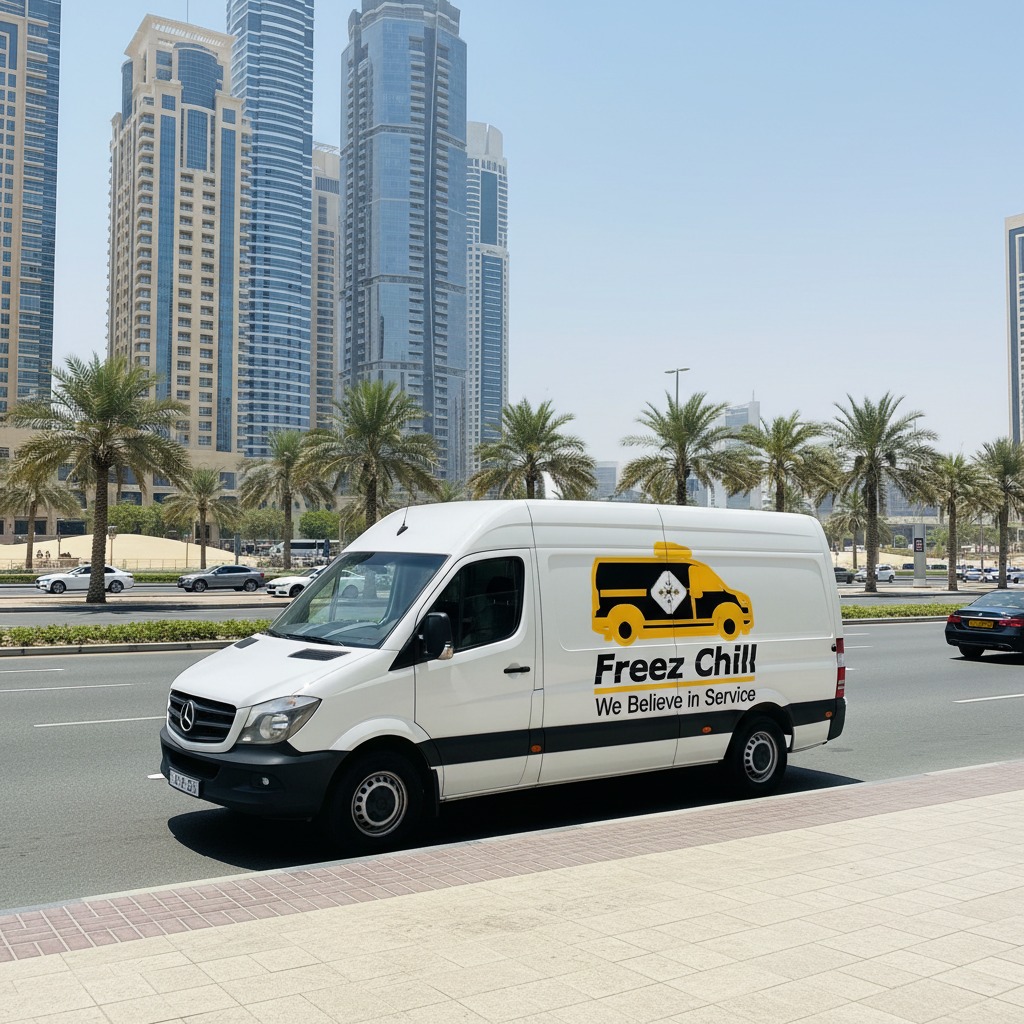
Factors to Consider Before Choosing
When deciding between these two vehicles for your business at FreezChill, ask yourself the following questions:
How long is the journey?
If you are doing a quick 15-minute delivery, a chiller van might suffice for frozen goods if they are packed in thermal bags. However, for longer routes or multiple stops, you must have a freezer van to ensure the “cold chain” is not broken.
How often will the doors be opened?
Every time the back door opens, cold air escapes. If you have 20 drops to make across the city, a freezer van’s more powerful motor will recover the lost temperature much faster than a chiller van.
What is the ambient temperature?
In hotter climates, a chiller van has to work twice as hard just to stay at 5°C. If you operate in an area with extreme summer heat, upgrading to a vehicle with better insulation (like a freezer van) provides an extra layer of safety for your chilled goods.
Maintaining the Cold Chain
Regardless of whether you choose a chiller or a freezer van, maintaining the “Cold Chain” is the ultimate goal. The cold chain is a temperature-controlled supply chain that ensures perishable goods are kept within a specific temperature range from the point of origin to the final delivery.
Failure to maintain this can lead to:
- Legal Issues: Health departments have strict regulations on food transport temperatures.
- Financial Loss: A single spoiled load can cost thousands of dollars.
- Reputational Damage: Delivering wilted flowers or melted ice cream will lose you customers quickly.
Summary: Which One Do You Need?
- Choose a Chiller Van if: You deliver fresh food, drinks, flowers, or pharmaceuticals that must stay between 0°C and 8°C. It is more cost-effective and provides the perfect environment for “fresh” goods.
- Choose a Freezer Van if: You deliver anything that must stay solid (ice, frozen meat, ice cream).
- Choose a Freezer Van Rental if: You want the most versatile option that can handle both frozen and chilled goods, or if you only need the vehicle for specific contracts or seasons.
Conclusion
Understanding the difference between a chiller van and a freezer van is essential for any business dealing with perishables. A chiller van keeps things fresh, while a freezer van keeps things frozen.
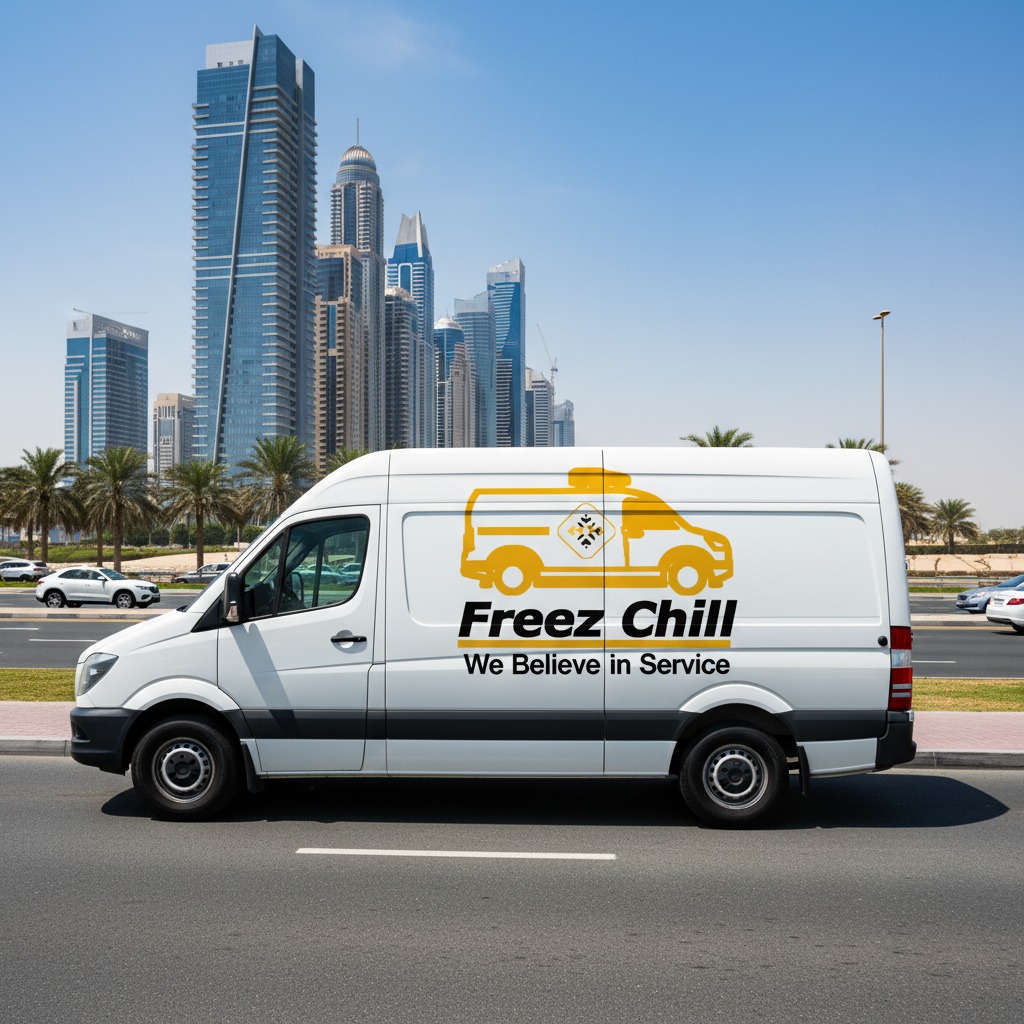
At FreezChill, we specialize in providing high-quality temperature-controlled solutions. Whether you need a mobile chiller van for a local event or a mobile freezer van for long-haul distribution, knowing these technical differences ensures your products arrive in perfect condition every time.
Don’t risk your cargo choose the right tool for the job. If you’re still unsure, contact our team to discuss which van configuration best suits your business goals.