
The United Arab Emirates is a global hub for trade, logistics, and tourism. In a region where summer temperatures frequently soar above 45°C, the “Cold Chain” is not just a luxury it is the backbone of the economy. Whether it is fresh Atlantic salmon arriving at Dubai International Airport or life-saving pharmaceuticals being distributed in Abu Dhabi, UAE refrigerated transport ensures that perishables reach their destination in perfect condition.
For businesses operating in the Middle East, understanding how nationwide refrigerated transport works and how to navigate the specific requirements of cities like Dubai, Sharjah, and Abu Dhabi is essential for success.
The Importance of Refrigerated Transport in the UAE
The UAE relies heavily on imports for its food and medical supplies. Maintaining the integrity of these goods from the port to the shelf requires a seamless network of temperature-controlled vehicles.
1. Food Safety and Security
With the UAE’s “National Strategy for Food Security 2051,” there is a massive emphasis on reducing food waste. Improper transport is a leading cause of food spoilage. High-quality Sharjah refrigerated transport and services across other emirates ensure that the “farm to fork” journey is never interrupted.
2. Pharmaceutical Integrity
The UAE has become a regional center for healthcare. Vaccines, insulin, and laboratory samples are highly sensitive to heat. A breakdown in cooling for even ten minutes can render these products useless. This makes reliable nationwide refrigerated transport a non-negotiable requirement for the medical sector.
3. Economic Growth
The booming hospitality sector in Dubai and Abu Dhabi demands a constant supply of fresh ingredients. From five-star hotels to local cafeterias, every business relies on a refrigerated van or truck to keep their inventory fresh.
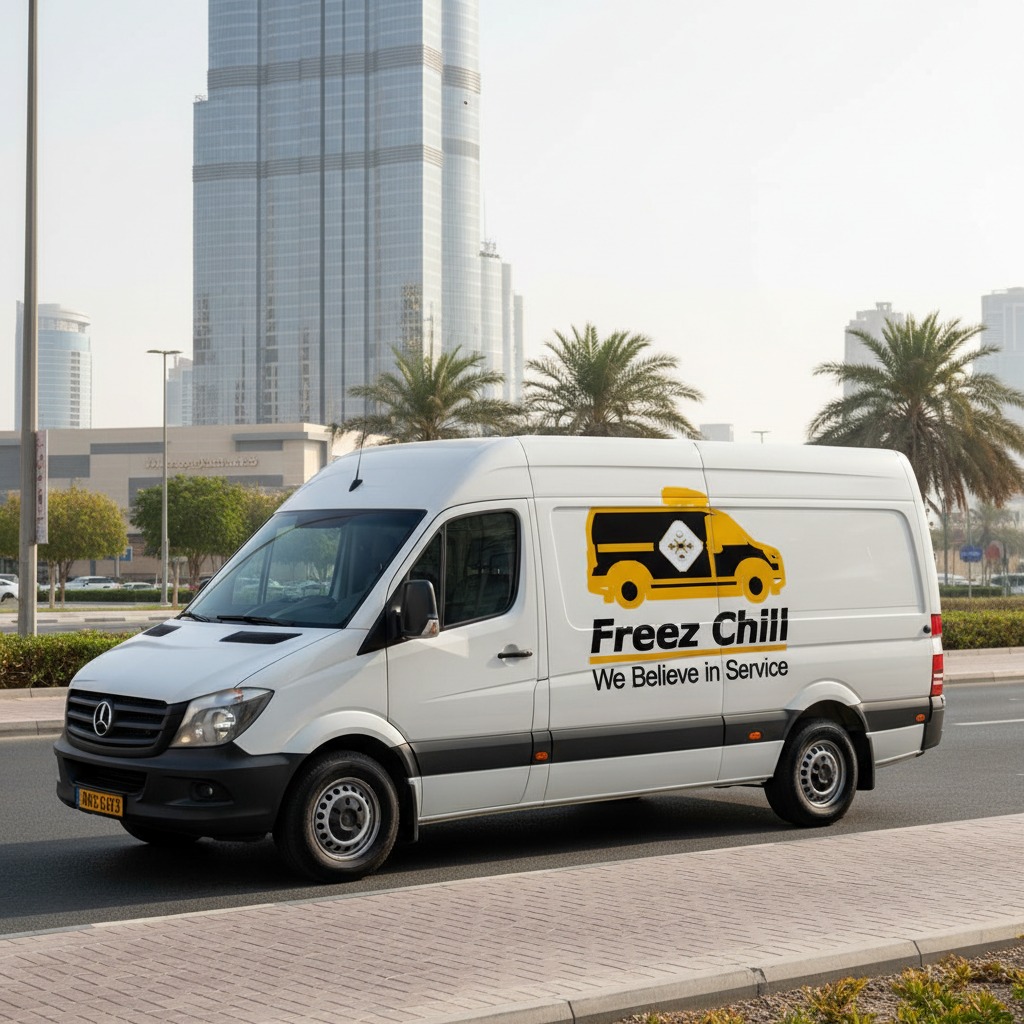
Key Logistics Hubs: Dubai, Abu Dhabi & Sharjah
While the UAE is a unified country, each emirate has its own logistics landscape and specific demands for temperature-controlled moving.
Dubai: The Gateway to the World
Dubai is the heart of the UAE’s logistics sector. With Jebel Ali Port and Al Maktoum International Airport, the volume of cargo moving through the city is staggering.
- The Challenge: High traffic density and strict delivery windows in areas like Downtown or Dubai Marina.
- The Solution: Small to medium-sized refrigerated vans are often preferred for “last-mile” delivery to navigate tight streets and busy loading docks.
Abu Dhabi: The Industrial and Healthcare Powerhouse
As the capital, Abu Dhabi focuses heavily on industrial logistics and large-scale distribution.
- The Demand: There is a high requirement for heavy-duty refrigerated trucks for long-haul transport between the capital and the Western Region (Al Dhafra).
- The Focus: High-tech cooling for pharmaceutical hubs and government-backed food security projects.
Sharjah: The Manufacturing and Distribution Link
Sharjah serves as a vital bridge between the northern emirates and the southern hubs.
- The Advantage: Many manufacturing units and warehouses are based in Sharjah’s industrial areas.
- The Need: Efficient Sharjah refrigerated transport to move goods from factories to retail outlets in Dubai and Ajman quickly.
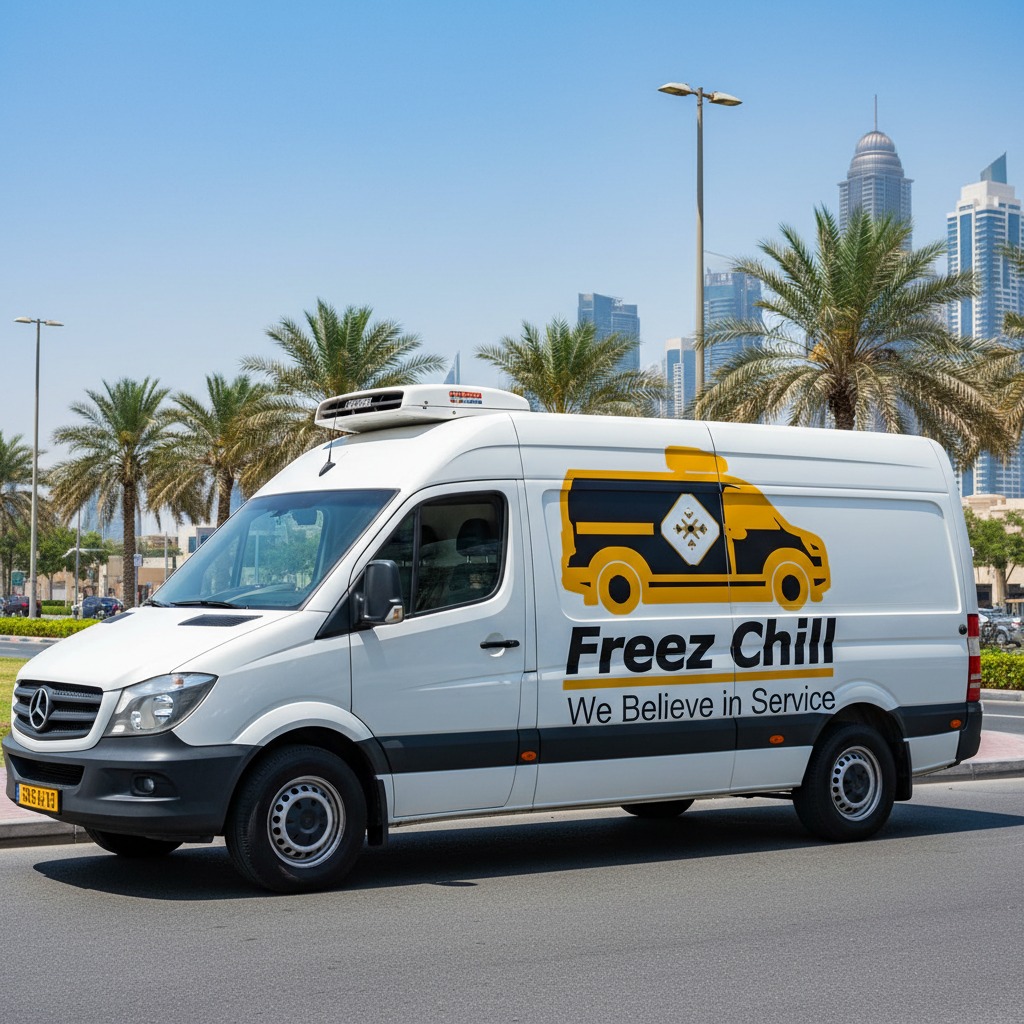
What is Nationwide Refrigerated Transport?
When we talk about nationwide refrigerated transport, we refer to a service that covers all seven emirates. It isn’t just about having a van; it’s about having a network.
A truly nationwide service provides:
- Inter-Emirate Connectivity: Moving goods seamlessly from a warehouse in Sharjah to a supermarket in Al Ain or a hotel in Ras Al Khaimah.
- Consistency: Ensuring the same high standards of cooling and hygiene, regardless of where the vehicle is traveling.
- Compliance: Adhering to the specific municipality regulations of each emirate (e.g., Dubai Municipality food transport permits).
Cross-Border Refrigerated Transport: Moving Beyond the UAE
The UAE serves as a springboard for the rest of the GCC (Gulf Cooperation Council). Cross border refrigerated transport is the process of moving temperature-sensitive goods from the UAE into neighboring countries like Oman and Saudi Arabia.
Challenges of Cross-Border Logistics
- Extended Travel Times: Unlike a trip from Dubai to Abu Dhabi, cross-border trips can take days. This requires advanced refrigeration units with high fuel autonomy and backup power.
- Border Inspections: Vehicles may sit at border crossings under the hot sun. Superior insulation (at least 100mm thick) is vital to ensure the internal temperature remains stable while the vehicle is stationary.
- Regulatory Documentation: Moving food or medicine across borders requires specific health certificates and customs clearance that prove the cold chain was maintained throughout the journey.
Features of a High-Quality Refrigerated Fleet
If you are looking for a partner for UAE refrigerated transport, you should look for these technical features in their fleet:
Advanced Telematics and GPS
Modern logistics require real-time tracking. You should be able to see exactly where your driver is and, more importantly, what the temperature inside the cargo hold is at any given second.
Multi-Temperature Capabilities
Some loads are “mixed.” For example, a grocery delivery might need a section for frozen meat (-18°C) and a section for fresh vegetables (4°C). Multi-temp vans use internal partitions and dual evaporators to handle both in one trip.
Regular Calibration
The sensors inside a refrigerated van can drift over time. Professional nationwide providers calibrate their equipment every six months to ensure that “5°C” on the screen actually means 5°C in the cargo area.
Standby Power Units
In the UAE, drivers often have to take mandatory breaks. A “Electric Standby” feature allows the refrigeration unit to be plugged into a wall outlet, keeping the cargo cool without needing the engine to run, saving fuel and reducing emissions.
Choosing the Right Partner for Your Business
At FreezChill, we understand that your business depends on the reliability of our vehicles. Whether you are looking for a short-term rental or a long-term logistics partner, here is what sets the best providers apart:
- 24/7 Support: Breakdowns in the desert heat are an emergency. Your transport partner must have a 24/7 recovery and replacement service.
- Cleanliness Standards: Transporting food requires a high level of hygiene. Vans must be sanitized regularly to prevent cross-contamination and odors.
- Driver Training: A refrigerated van is more than just a car. Drivers must know how to monitor the cooling unit and how to load the van to ensure proper airflow around the products.
The Future of Refrigerated Transport in the UAE
The industry is moving toward sustainability. With the UAE’s commitment to “Net Zero 2050,” we are seeing a rise in:
- Solar-Powered Cooling: Using solar panels on the roof of the truck to assist the refrigeration unit.
- Electric Refrigerated Vans: Ideal for short-distance deliveries in urban areas like Downtown Dubai to reduce the carbon footprint.
- AI-Optimized Routing: Using AI to find the fastest, coolest routes to minimize the strain on the cooling systems.
Conclusion
Navigating UAE refrigerated transport requires more than just a cold box on wheels. It requires an understanding of the local climate, the geographical nuances of Dubai, Abu Dhabi, and Sharjah, and the complexities of cross border refrigerated transport.
Whether you are a small business owner delivering organic milk or a large corporation managing a pharmaceutical supply chain, FreezChill is here to provide the nationwide support you need. Our fleet is equipped with the latest technology to ensure that “chilled” stays chilled and “frozen” stays frozen no matter how high the temperature climbs outside.